

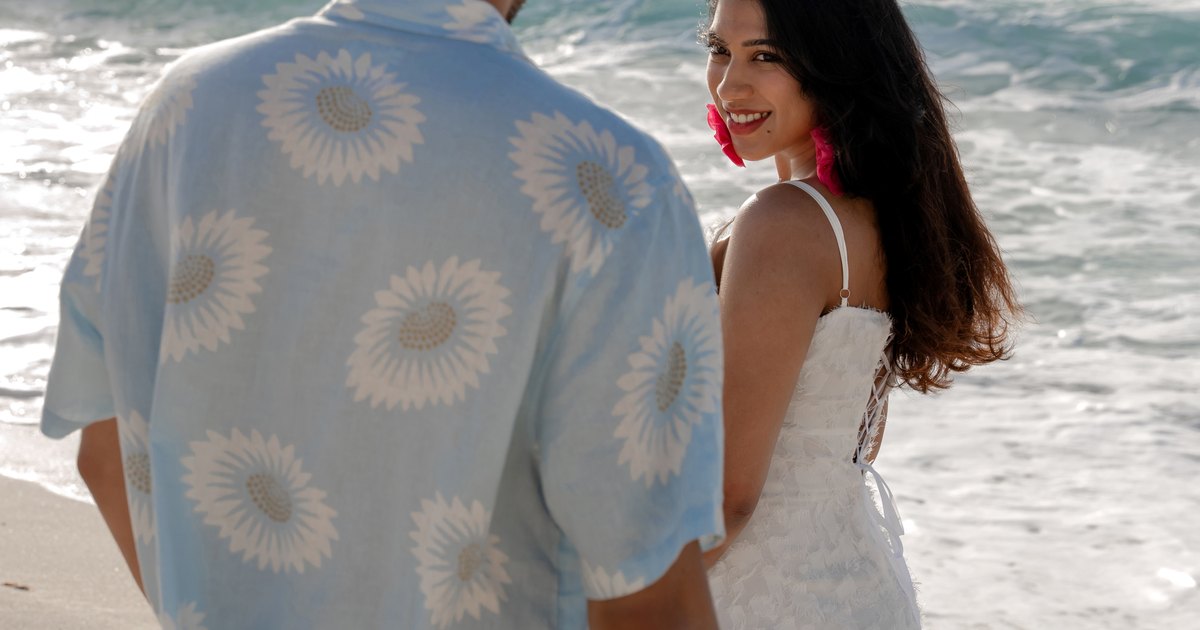
Screen for consistency: ask for a full gallery, not a 10-image highlight reel, and look for 20 to 30 images that share one recognizable aesthetic. Expect three price tiers in Mexico, $150 to $300 volume shooters, $400 to $700 mid-range professionals and $800 to $1,500+ luxury editorial work, with 1 to 4 weeks the delivery standard for luxury galleries.
You have spent months planning a trip to Mexico, choosing the resort, coordinating schedules, packing exactly the right outfits. The last thing you want is to entrust the visual memory of that experience to someone who treats photography as an assembly line. This guide will help you distinguish between a luxury photographer in Mexico who delivers editorial-quality work and one who simply shows up with a camera.
Why Not All Photographers Are Created Equal
There is a fundamental difference between a tourist snapshot and a photograph that belongs in a magazine. That difference is not the camera body or the lens, it is the person behind it. A luxury photographer in Mexico brings a trained eye for composition, an understanding of how tropical light behaves at different hours, the ability to direct posing that looks natural rather than stiff, and a post-production workflow that produces consistent, refined results across an entire gallery.
Mexico's resort destinations, Cancún, Riviera Maya, Los Cabos, attract millions of visitors each year, and the photography market has responded with every level of quality imaginable. You will find photographers advertising on Instagram with polished grids that mask inconsistent work. You will find resort-contracted shooters who process 15 sessions per day. And you will find independent editorial photographers who limit their bookings, invest in every detail of the client experience, and deliver imagery that feels intentional from the first frame to the last.
The challenge is telling them apart before you hand over a deposit. Price alone does not guarantee quality, and a beautiful website does not mean the person behind it will deliver what you expect. What follows is a practical framework for evaluating any photographer you are considering in Mexico, whether you are booking a couples session, a family portrait experience, or a destination wedding.
7 Red Flags When Hiring a Resort Photographer
Before you book anyone, scan for these warning signs. Any single one deserves a follow-up question. Two or more in combination should prompt you to keep looking.
- No portfolio or an inconsistent portfolio. A legitimate luxury photographer in Mexico will show full galleries or at least cohesive collections from real sessions, not a handful of isolated images with wildly different editing styles. If you cannot see at least 20 to 30 images that share a recognizable aesthetic, the quality you receive is unpredictable. Ask for a recent full session gallery, not just a highlight reel.
- Stock photos or watermarked images on their website. This may sound obvious, but it happens more often than you would expect. If a photographer's website features images from stock libraries, or if the watermarks on portfolio images belong to a different photographer, you are not looking at their work. Reverse image search any photo that seems too polished or generic.
- No reviews or only anonymous testimonials. Real clients leave reviews on Google, social media, and wedding directories with their names attached. If a photographer has no verifiable reviews after claiming years of experience, that absence tells you something. Look specifically for reviews that mention the full experience, communication, punctuality, editing quality, delivery time, not just vague praise.
- Unclear or absent pricing. A professional does not need to publish exact rates on their website, but they should provide clear pricing within the first one or two messages. If you receive vague responses, constantly shifting quotes, or pressure to "just book now and we will figure it out," that lack of transparency will extend to every other part of the experience.
- No contract. This is non-negotiable. A contract protects both parties and outlines deliverables, timelines, cancellation policies, usage rights, and what happens if something goes wrong. Any photographer who resists putting terms in writing is either disorganized or deliberately avoiding accountability. Walk away.
- No backup equipment. Cameras fail. Memory cards corrupt. Lenses can be damaged in transit. A professional luxury photographer travels with a second camera body, duplicate memory cards, backup batteries, and often a backup lens. Ask directly: "What happens if your camera fails mid-session?" If the answer is anything other than "I switch to my backup immediately," reconsider.
- No resort experience. Photographing at a luxury resort in Mexico is not the same as photographing in a park. Resorts have vendor policies, security protocols, restricted areas, and specific lighting conditions that change by the hour. A photographer who has never worked at your property, or any comparable resort, will spend your session time figuring out logistics instead of creating images. Experience at your specific resort, or at least at resorts of similar caliber, is a meaningful differentiator.

10 Questions to Ask Before Booking
Once you have narrowed your options to photographers who pass the red-flag screening, these questions will help you evaluate fit, professionalism, and whether the final product will match your expectations.
- What is your turnaround time for the final gallery? Industry standard for luxury work ranges from 1 to 4 weeks. Anything beyond 6 weeks without a clear explanation is a concern. Some photographers offer expedited sneak peeks within 24 to 72 hours, a valuable detail when you want to share images while you are still on vacation.
- Can I see a full gallery from a recent session? Highlight reels show a photographer's best 10 images. A full gallery reveals consistency, which is what actually matters when you are paying for 60 to 120 deliverables. Pay attention to whether quality holds across the entire set or drops off after the first few frames.
- What is your editing style, and can it be customized? Some photographers apply heavy presets that create a trendy look but age poorly. Others edit for timelessness, natural skin tones, balanced exposure, refined color grading that will look as good in 10 years as it does today. Ask to see before-and-after examples if the editing style is important to you.
- What is your backup plan if you cannot make it? Illness, flight cancellations, and emergencies happen. A professional has a network of trusted colleagues who can step in, or they employ a second shooter who is fully briefed on your session. The worst answer is silence or "that has never happened."
- Have you worked at my specific resort before? This question is particularly relevant in Cancún and Riviera Maya, where resort layouts, lighting conditions, and vendor access policies vary dramatically from property to property. A photographer who knows your resort saves time, avoids logistical errors, and can recommend the best on-property locations at the optimal time of day.
- Do you provide posing direction during the session? This is the dividing line between a luxury photographer and someone who simply takes pictures. Real direction means guiding your body angles, hand placement, gaze, movement, and interaction, creating frames that feel natural but are architecturally composed. If the answer is "I just capture candid moments," your results will depend entirely on luck.
- What is included in your package, and what costs extra? Clarify the number of edited images, whether raw files are included, whether travel to your location is covered, and whether there are additional fees for multi-location sessions, outfit changes, or extended time. Hidden costs are a common source of frustration.
- Do you carry liability insurance? At luxury resorts and private venues, insurance is often a requirement for external vendors. Even where it is not required, insurance indicates a level of professionalism and business maturity that correlates with a reliable overall experience.
- How do you handle weather changes or cancellations? In Mexico, weather is a factor, particularly during the rainy season from June through October. A seasoned photographer monitors conditions, has indoor backup plans, and includes a rescheduling clause in their contract. Ask specifically how many times they have had to reschedule and how they handled it.
- Can I see your contract before paying a deposit? Any photographer who hesitates to share their contract before payment is not someone you want to work with. Read the cancellation policy, the delivery timeline, the usage rights, and the refund terms carefully. A clear, professional contract is one of the strongest indicators of a legitimate luxury photography business.
What Editorial Photography Actually Means
The word "editorial" appears frequently in luxury photography marketing, but many clients, and some photographers, use it loosely. Understanding what it actually means will help you evaluate whether a photographer delivers it or merely claims to.
Pose direction. Editorial photography is not candid photography with a filter applied afterward. It begins with intentional direction, guiding subjects into positions that create visual interest, flattering angles, and emotional resonance. This does not mean rigid, uncomfortable posing. It means a photographer who understands body mechanics, spatial relationships, and how micro-adjustments (a tilted chin, a shifted weight, a hand placed two inches lower) transform a snapshot into a portrait.
Light mastery. The difference between amateur and editorial work is most visible in how light is handled. An editorial photographer does not just chase golden hour, they understand how to read ambient light in any environment, how to position subjects relative to the sun's angle, how to use natural reflectors (white sand, light walls, water) to fill shadows, and when to use supplemental lighting tools. In Mexico's intense tropical light, this skill is not optional. It is the foundation of every strong image.
Post-production. Editorial editing goes far beyond applying a preset. It involves individual color grading, skin retouching that preserves texture and pore detail, precise exposure balancing across a gallery, and careful attention to background distractions. The result is a set of images with a unified visual identity, every photograph feels like it belongs in the same collection, whether it was shot in open shade or direct backlight.
Magazine quality. The benchmark for editorial work is simple: would this image hold up on a printed page in a high-end publication? That standard demands sharpness, resolution, deliberate composition, and an absence of the small errors (crooked horizons, distracting background elements, unflattering shadows) that casual photography tolerates. When you work with a true editorial photography team, every image in your gallery meets this standard, not just the favorites.

Price Ranges and What You Get at Each Level
Understanding what different price points actually buy helps set realistic expectations and prevents the most common mistake in hiring a photographer abroad: choosing on price alone and being disappointed by the result.
$150 to $300 USD, Budget Photography
At this level, you typically receive 30 to 60 minutes with a photographer who may be new to the profession, working without backup equipment, or operating on a volume model that processes many sessions per day. Editing is usually batch-processed with a single preset applied uniformly. There is rarely a planning call, wardrobe guidance, or personalized creative direction. The images will document that you were in Mexico. They may not capture how it felt to be there.
$400 to $700 USD, Mid-Range Professional Photography
This range offers a meaningful step up. You can expect 60 to 90 minutes of shooting, a photographer with a consistent portfolio and verifiable experience, basic posing direction, individual editing on each image, and delivery of 50 to 100 photographs within 1 to 3 weeks. Communication is usually responsive, and a contract is standard. For many travelers, this range delivers solid results that feel intentional and professional.
$800 to $1,500+ USD, Luxury Editorial Photography
At the luxury level, the experience begins long before the shutter clicks. A dedicated planning call covers wardrobe guidance, location scouting based on your specific resort, timing optimized for the best light, and creative direction tailored to your preferences. During the session, expect precise editorial direction, multiple composed setups, and a photographer who manages every visual detail. Post-production involves individual grading and retouching. Delivery includes a curated private gallery within a defined timeline, often with an expedited sneak peek. This is the level where photography becomes an experience, not just a service, and where the resulting images are indistinguishable from published editorial work.
Resort Photographer vs. Independent Luxury Photographer
Many luxury resorts in Mexico offer photography services as part of their concierge program. Understanding the structural differences between this option and hiring an independent luxury photographer helps you make an informed decision.
Resort photographers are typically contracted by the hotel and work on a rotation. They know the property well, which is a genuine advantage. However, they often process a high volume of sessions, sometimes five or more per day, which limits the creative energy and individualized attention available for each client. Editing is usually standardized across all sessions to maintain brand consistency for the resort rather than tailored to each client's preferences. Communication typically runs through the concierge desk rather than directly with the photographer, which can create delays and miscommunication. Pricing is often competitive, but the deliverable count and editing quality may not match what an independent professional offers at a similar or slightly higher rate.
Independent luxury photographers control their entire process, from the initial inquiry to final delivery. They limit their daily bookings (typically one or two per day) to ensure each session receives full creative attention. Communication is direct. The creative direction is personalized. The editing style is the photographer's own, developed over years of refinement rather than dictated by a resort brand guide. The tradeoff is that you need to coordinate resort access yourself (or with the photographer's help), and pricing tends to be higher. For clients who prioritize a personalized, editorial result over convenience, the independent route consistently delivers stronger portfolios.
Neither option is universally better. If convenience and cost are your primary concerns and you are comfortable with standardized results, a resort photographer is a practical choice. If the quality and personalization of the final images matter most, an independent luxury photographer in Cancún, Riviera Maya, or Los Cabos will deliver a fundamentally different experience and product.
What a Professional Process Looks Like
To illustrate what a luxury photography experience should feel like from start to finish, here is how our team at IVAE Studios structures the client journey. While every studio operates differently, the elements below represent the standard you should expect from any photographer charging luxury rates.
Discovery and Planning Call
Before any session is confirmed, our team schedules a planning call to understand the purpose of your trip, the mood you want your images to convey, and the practical details, your resort, your travel dates, how many people will be photographed, and any specific locations or moments that matter to you. This call replaces the generic "show up and see what happens" approach with a clear creative direction agreed upon before you arrive in Mexico.
Wardrobe Guidance
What you wear affects your photographs more than most clients realize. Our team provides specific recommendations based on your session location, the time of day, and the overall aesthetic, including color palettes that complement the environment, fabric types that move well in ocean wind, and outfit coordination guidance for couples and families. This step alone elevates the final result significantly.
Golden Hour Timing and Location Selection
Every session is scheduled around the optimal light window for your specific location. At a Riviera Maya beachfront resort, that timing differs from a cenote in the jungle or a rooftop terrace in Los Cabos. Our team calculates the exact golden hour window for your session date and selects primary and backup locations accordingly, accounting for crowd patterns, tide conditions, and the angle of light at that specific property.
The Session Itself
Sessions typically run 60 to 90 minutes with full editorial direction. The first 10 minutes focus on settling in, light prompts, natural movement, building comfort with the camera. By the midpoint, most clients have forgotten the camera exists entirely, and the images shift from beautiful to genuinely emotional. Our team manages every element: positioning, transitions between setups, timing of movement, and micro-adjustments that create the polished, intentional look that defines editorial work.
48-Hour Sneak Peek
Within 48 hours of your session, our team delivers a curated selection of 5 to 10 fully edited preview images. These are designed for immediate sharing, optimized for social media and messaging, so you can relive the experience while you are still on vacation or shortly after returning home. This sneak peek is not a rough draft. Every image is fully edited to final delivery standards.
Full Gallery Delivery Within Two Weeks
The complete gallery, typically 60 to 120 individually edited images, is delivered through a private online gallery within two weeks. Each photograph is color-graded, retouched, and exported at full resolution for printing as well as web-optimized versions for digital use. The gallery itself is shareable, downloadable, and designed to feel like an extension of the luxury experience.

This level of structure and attention is what separates a luxury photographer in Mexico from someone who simply takes photographs in a beautiful location. The location provides the backdrop. The process creates the result.