

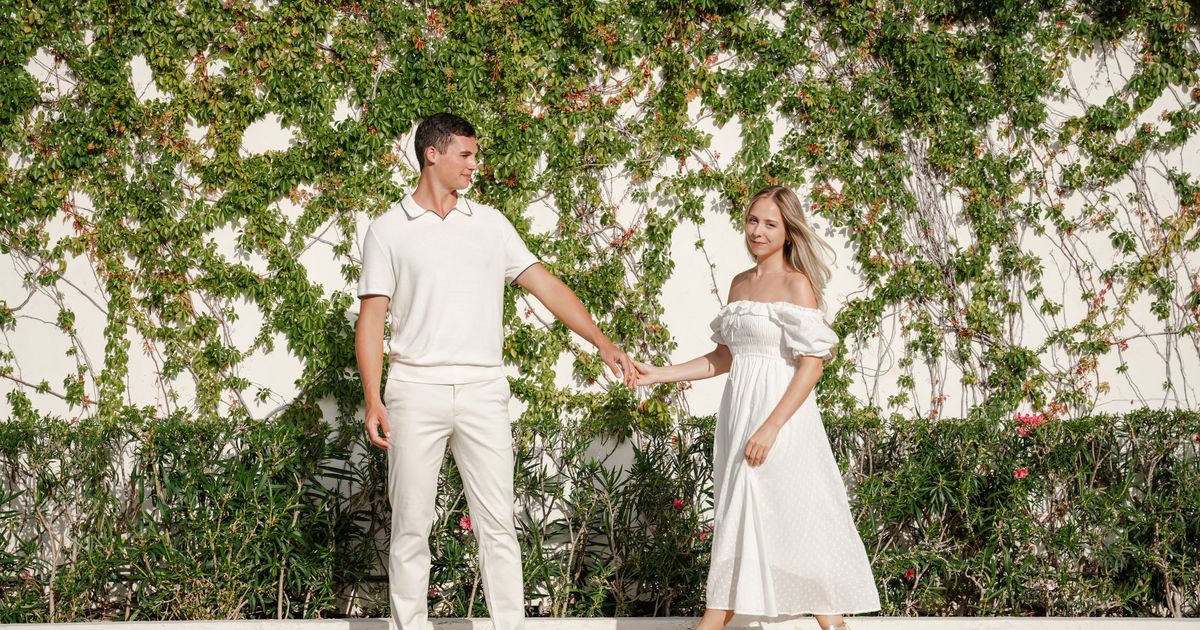
Choose breathable natural fabrics in coordinating colors: the coast runs 26 to 34 degrees Celsius with humidity above 80 percent, so linen and soft cotton beat anything structured. Apply sunscreen at least 90 minutes before the session and repellent 30 minutes before, and pick hairstyles that work with the humidity, not against it.
You have spent months planning a trip to Mexico's Caribbean coast. The flights are booked, the resort is confirmed, and the photo session is scheduled for golden hour. But the question that causes more last-minute stress than anything else is deceptively simple: what should we wear? The answer matters more than most people realize, and getting it right is easier than you think.
Why What You Wear Matters More Than You Think
A professional beach photograph is not a snapshot. It is a composition where every element, light, color, texture, movement, background, works together to create a single cohesive image. Your clothing is not a minor detail in that equation. It is, after your face and body language, the most prominent visual element in the frame.
The wrong outfit does not just look bad. It actively competes with the natural beauty of the scene. A neon pink tank top pulls the viewer's eye away from an embrace. A heavy dark fabric absorbs all the warmth of golden-hour light instead of reflecting it. A stiff, structured garment sits motionless in a Caribbean breeze while everything around it, hair, waves, palm fronds, moves with life and rhythm.
Conversely, the right outfit amplifies everything the photographer is working to capture. A lightweight linen dress catches the wind and creates movement. Warm neutral tones harmonize with sand and sky rather than clashing against them. Soft, natural fabrics drape in ways that flatter every body type while reflecting the relaxed elegance of a tropical setting. Our team has photographed hundreds of sessions across Cancun and the Riviera Maya, and we can say with certainty: couples and families who plan their wardrobe intentionally receive galleries they are significantly happier with.
This guide distills everything our team has learned from years of beach photography across Mexico into specific, actionable advice. Whether you are a couple on a romantic getaway, a family coordinating four generations, or a bride choosing between two dresses for an elopement ceremony, the principles are consistent and the application is straightforward.
The Golden Rule: Neutrals and Earth Tones
If you remember only one thing from this guide, let it be this: neutral and earth tones photograph beautifully on every beach in Mexico, in every light condition, on every skin tone, and in every combination. This is not a matter of opinion or trend. It is a function of color theory and how digital cameras render tonal relationships.
The Mexican Caribbean coast has a very specific natural palette: turquoise water, white or cream sand, deep green vegetation, golden light at sunrise and sunset, and vast expanses of blue sky. Your clothing needs to complement this palette rather than compete with it. The tones that achieve this most reliably are:
- Cream and ivory, warm, luminous, and universally flattering against tanned or sun-kissed skin. These tones reflect golden-hour light beautifully and create a soft, editorial quality that reads as effortlessly elegant.
- Beige and sand, grounding without being heavy. These tones blend seamlessly with the beach environment while providing enough contrast against skin to maintain visual definition.
- Sage green, the most versatile accent tone for beach photography. Sage bridges the gap between the ocean's cool tones and the warmth of sand and skin. It photographs as calm, organic, and quietly striking.
- Dusty rose and mauve, soft, romantic, and particularly beautiful during sunset when the sky shares similar hues. These tones work exceptionally well for couples sessions and engagement photos.
- Terracotta and rust, warm, earthy, and distinctly complementary to turquoise water. Terracotta adds visual interest without overwhelming the frame and works beautifully on all skin tones.
- Navy blue, the darkest tone our team typically recommends. Navy provides depth and contrast without the harshness of black, pairs well with every other color on this list, and has a timeless sophistication that reads well in both editorial and candid moments.
The genius of this palette is that every color on the list works with every other color on the list. A family of five can each wear a different tone from this range and the overall effect is cohesive, intentional, and visually stunning without looking like a uniform.

What to Avoid Wearing for Beach Photos
Understanding what does not work is just as important as knowing what does. These are the most common wardrobe choices that consistently produce disappointing results in beach photography, and the specific reasons they fail.
Neon and Saturated Colors
Bright neon yellow, electric blue, hot pink, and fluorescent green reflect colored light onto skin, creating unnatural color casts that are extremely difficult to correct in editing. A neon green shirt will literally cast a green tint on the wearer's face and neck. Beyond the color cast issue, saturated colors dominate the viewer's attention, pulling focus away from expressions, connection, and the natural beauty of the setting.
Large Logos and Graphic Prints
Brand logos, graphic text, and large printed designs date photographs instantly and create visual clutter that competes with the subject. A photograph should capture who you are and how you feel, not what brand you purchased. Even subtle logos become distracting at the resolution of professional photography.
All-Black Outfits
Black absorbs light. On a bright beach, black clothing creates a dark, heavy visual mass that contrasts harshly with the airy, luminous environment. It also absorbs the warmth of golden-hour light instead of reflecting it, which means your clothing appears as a flat, dimensionless void while everything else in the frame glows. In practical terms, black also absorbs heat, and in Mexico's tropical climate, that translates to visible discomfort, sweat marks, and stiff body language.
All-White Outfits
Pure white can overexpose against bright white sand, especially in any light condition outside of the final minutes of golden hour. The camera struggles to maintain detail in both the white clothing and the bright sand simultaneously, often resulting in a blown-out, washed-out appearance. Off-white, ivory, and cream solve this problem entirely while retaining the light, airy aesthetic that draws people to white in the first place.
Busy Patterns and Florals
Small, complex patterns, tiny florals, dense stripes, intricate geometric prints, create a visual effect called moire when photographed digitally. Even when moire does not occur, busy patterns compete for the viewer's attention and make coordinating multiple outfits nearly impossible. If you love pattern, choose something large-scale and subtle, a wide stripe, a single oversized botanical, rather than a dense, all-over print.
For Couples: Coordinating Without Matching
The most common wardrobe mistake couples make is matching exactly, the same white linen shirt, the same khaki shorts, the same shade on both bodies. While the instinct is understandable, identical outfits create a costume effect that diminishes individuality and reads as staged rather than natural.
The principle that produces the best results is coordination through complementary palettes and texture mixing. Choose two or three tones from the neutral and earth-tone palette that sit in the same visual temperature. If one partner wears a cream linen dress, the other might wear light sage trousers with a cream or white linen shirt. If one wears dusty rose, the other wears light tan or warm beige. The colors converse without shouting.
Texture adds the dimension that identical fabrics remove. When one partner wears smooth cotton and the other wears textured linen, the camera reads depth and visual interest even when the color palette is quiet. A knit fabric against a woven one, a slightly translucent chiffon layer over a solid base, a cotton shirt with visible linen weave against smooth draping, these differences are subtle in person but significant in photographs.
For couples sessions in Mexico, our team typically recommends bringing two complete outfit options. The first should be your primary look, the one you would choose if you could only wear one thing. The second should be simpler, perhaps more casual, and in a complementary but slightly different tone. This gives the photographer options for variety across locations and allows a wardrobe shift if the first option does not feel right once you see the light and setting in person.

For Families: Building a Cohesive Palette
Family wardrobe coordination is where outfit planning has the highest impact and the highest potential for stress. The more people involved, the more variables there are, but the strategy is actually quite simple once you understand the framework.
Start with one anchor color. This is the dominant tone that will appear most prominently in the group, usually on one or both adults. Cream, warm beige, or soft white are the safest anchor choices because they are universally flattering and provide a neutral base that other colors can build from.
Next, choose two to three complementary tones from the earth-tone palette. These supporting colors will be distributed across the remaining family members. For a family of four, the composition might be: both parents in cream and beige, one child in sage, the other in dusty rose. For a larger family, add terracotta or navy as a third accent. The key is that every color in the group should feel like it belongs in the same visual conversation.
Tips by Age Group
Adults: Wear the anchor tones. Adults form the visual center of most family compositions, and neutral, grounding colors in the middle of the palette ensure the overall image reads as balanced and intentional. Mothers often gravitate toward flowing maxi dresses, an excellent choice that adds movement and elegance. Fathers look best in relaxed linen button-downs with rolled sleeves, paired with light-colored chinos or linen trousers.
Teenagers: Give them some autonomy within the palette. A teenage daughter might wear a sage or terracotta sundress while a teenage son wears a navy or light blue button-down. The colors still coordinate with the family, but the individual expression prevents the "catalog" look that teenagers universally dislike.
Young children (ages 3 to 10): Prioritize comfort above all else. Children who are uncomfortable in their clothing produce uncomfortable photographs, stiff posture, forced smiles, reluctant body language. Soft cotton dresses, linen shorts and simple tees, and rompers in coordinating colors keep children looking polished while allowing the freedom of movement that produces genuine, joyful expressions. Always bring a backup outfit for young children. Sand, ice cream, and spontaneous tide encounters are inevitable.
Babies and toddlers: Simple, solid-color onesies or rompers in the softest fabric available. Avoid shoes entirely, bare baby feet on sand are universally charming and endlessly photographable. Keep the outfit minimal so the baby's expression and personality remain the focus. For luxury family sessions in Cancun, our team provides a detailed wardrobe guide tailored to your specific family composition and the locations selected for your session.
For Weddings & Elopements: Flowing, Romantic, Effortless
Beach weddings and elopements in Mexico present a unique wardrobe opportunity: the setting itself is so visually powerful that the clothing can afford to be simpler, more fluid, and more responsive to the environment than a traditional indoor ceremony demands.
For brides, the single most important factor is movement. A dress that moves in the wind transforms every frame from a static portrait into a living, breathing moment. Lightweight chiffon, flowing silk, and layered tulle respond to even the slightest ocean breeze, creating the kind of effortlessly romantic imagery that defines editorial wedding photography. Long veils and cathedral trains become extraordinary compositional elements when caught by Caribbean wind, the photographer captures the fabric mid-flight, suspended against turquoise water or golden sky, in moments that are impossible to replicate in a studio or indoor venue.
Avoid heavily structured gowns with rigid boning and thick underlayers. These designs, while stunning in a ballroom, fight against the beach environment rather than embracing it. The heat becomes oppressive, the fabric sits heavy and motionless, and the formality creates visual dissonance against the organic casualness of sand and sea. If your heart is set on a structured gown for your ceremony, consider having a second, lighter dress specifically for beach portraits, many of the most striking wedding galleries we have produced combine a formal ceremony look with a flowing editorial look for the couples session afterward.
For grooms, the linen suit has become the definitive choice for Mexico beach weddings, and for good reason. Linen breathes in tropical heat, drapes with relaxed sophistication, and photographs with a texture and warmth that wool and synthetic blends cannot replicate. Light tan, warm beige, light grey, and soft blue are the strongest color choices. A linen shirt without a jacket, open at the collar, paired with linen trousers and bare feet or leather sandals is equally appropriate and photographs beautifully. As a destination wedding photographer in Mexico, our team has seen every combination and can confirm: the grooms who look most at ease are the ones who dress for the environment rather than against it.

Fabric Guide for Tropical Heat
Mexico's Caribbean coast is warm and humid year-round. Average temperatures range from 26 to 34 degrees Celsius, and humidity regularly exceeds 80 percent. The fabric you choose determines not only how you look in photographs but how you feel during the session, and comfort is directly reflected in your posture, expression, and body language.
Recommended Fabrics
- Linen, the gold standard for tropical photography. Breathable, naturally textured, and elegantly relaxed. Linen wrinkles intentionally, those soft creases add character and movement to photographs rather than looking unkempt. Ideal for shirts, trousers, dresses, and lightweight blazers.
- Lightweight cotton, universally comfortable and available in every garment type. Look for cotton with a loose weave rather than dense, heavy cotton. Cotton jersey and cotton voile are particularly good choices for flowing silhouettes.
- Chiffon, a photographer's dream fabric. Sheer, weightless, and extraordinarily responsive to wind. Chiffon layers create depth and movement in every frame. Best used in dresses, skirts, scarves, and bridal veils.
- Silk and silk blends, luxurious drape and a subtle luminosity that catches light beautifully. Silk is warm-weather appropriate in lightweight weaves and works particularly well for evening sessions when the heat has softened.
Fabrics to Avoid
- Polyester and synthetic blends, trap heat, restrict airflow, produce visible sweat marks, and often have an artificial sheen that the camera reads as cheap and shiny. Polyester in tropical humidity is physically uncomfortable and visually unflattering.
- Heavy denim, stiff, dark, and oppressively hot in tropical conditions. Denim absorbs heat, restricts natural movement, and creates a visual weight that conflicts with the lightness of a beach setting. Lightweight chambray is an acceptable alternative if you want the denim aesthetic.
- Thick knits and wool, entirely inappropriate for tropical beach photography. These fabrics are designed for insulation and will cause visible overheating within minutes.
Accessories: Hats, Jewelry, Shoes & More
Accessories are where personal style enters the composition. The right accessory adds visual interest and personality without overwhelming the frame. The wrong one becomes a distraction or a logistical problem.
Hats
Wide-brimmed hats are one of the most photogenic accessories for beach photography. They add elegance, create beautiful shadow patterns on the face, and serve the practical purpose of sun protection. Choose natural straw or woven materials in a neutral tone. Avoid baseball caps and visors, they cast harsh, unflattering shadows and read as athletic rather than editorial. Be aware that wind can make wide-brimmed hats challenging to manage. Our team will help you hold and position the hat during the session for the frames where it adds value, and remove it for the moments where it becomes a distraction.
Jewelry
Less is more. Delicate gold or rose gold pieces, thin chains, small pendants, subtle earrings, photograph beautifully and catch the light without commanding attention. Statement jewelry has its place, but on the beach it often competes with the environment rather than complementing it. If you are wearing a statement earring, skip the necklace. If you are wearing a bold necklace, keep earrings minimal. The exception is bridal jewelry, where a more prominent piece can serve as a deliberate compositional element.
Sunglasses
Bring them for candid moments and lifestyle frames, a couple walking along the shoreline with sunglasses on reads as relaxed and cinematic. Remove them for any frame where eye contact and emotional connection are the focus. Reflective lenses create specific challenges (the photographer's reflection is visible), so choose non-reflective options if you plan to wear them in portraits.
Shoes
Barefoot is almost always the best choice for beach photography. It is authentic to the environment, universally flattering, and eliminates the visual awkwardness of sand-covered shoes. For women, simple leather sandals or espadrilles work well for walking shots and transitions between locations. Heels sink into sand and create an uncomfortable, unnatural gait that the camera captures immediately. For men, leather sandals or going barefoot are the two strongest options. Avoid sneakers, boat shoes, and flip-flops, all three read as casual in a way that undercuts the intentionality of a professional session.
Mexico-Specific Tips You Need to Know
Beach photography in Mexico's Caribbean region comes with environmental factors that other tropical destinations do not always share. These details are practical, specific, and can make the difference between a comfortable, beautiful session and a frustrating one.
Humidity
The Yucatan Peninsula maintains high humidity year-round, typically between 75 and 90 percent. Hair and makeup done in an air-conditioned hotel room will begin to shift within minutes of stepping outside. Our team recommends loose, natural hairstyles that embrace the humidity rather than fight it, beachy waves, soft updos, and styles that improve with a touch of frizz rather than being ruined by it. If professional hair and makeup is part of your session, ensure your stylist uses humidity-resistant products and setting sprays designed for tropical climates.
Wind
Coastal wind in Cancun and the Riviera Maya is consistent and often strong, especially during the winter months (November through March). Wind is an asset for photography, it creates movement in fabric and hair that produces dynamic, editorial imagery. However, it also means that very lightweight or unsecured garments can become unmanageable. Secure any pieces that might blow away, and choose a hairstyle that looks intentional when windswept rather than disheveled.
Sand
Fine white sand in Mexico's Caribbean gets everywhere. It adheres to sunscreen, lodges in fabric textures, and sticks to damp skin. Avoid dark fabrics that show sand easily (black and navy show sand more than light tones). Bring a small towel or blanket to stand on while changing shoes or adjusting clothing between setups. Sand is also reflective, it bounces light upward, which is actually beneficial for photography as it fills shadows under the chin and eyes naturally.
Sunscreen
Sunscreen is essential, but applying it incorrectly before a photo session creates visible problems. Fresh sunscreen leaves a white cast on skin that the camera amplifies dramatically, and oily formulas create a sheen that looks greasy in photographs. Apply sunscreen at least 90 minutes before your session so it absorbs completely into the skin. Use a matte-finish, non-white-cast formula, mineral sunscreens with zinc oxide are the most common offenders for white cast. Avoid spray sunscreen entirely before a session, as the mist settles unevenly and creates patchy, visible residue.
Mosquito Repellent
Mosquitoes are present along the Caribbean coast, particularly near mangroves, cenotes, and jungle areas, and particularly at dawn and dusk, precisely the times when golden-hour photography occurs. Apply repellent at least 30 minutes before your session and choose a formula that dries clear without residue. DEET-based repellents are most effective but can stain certain fabrics, so apply to skin and allow it to dry before dressing. Picaridin-based formulas are an alternative that is equally effective and less likely to affect clothing. Avoid applying repellent to your face, use it on exposed arms and legs, and the mosquitoes will largely leave your face alone.