

 Tulum cenote photographed by IVAE Studios" loading="eager" decoding="async" width="2000" height="1333"/>
Cenote Underwater Photographer in Tulum
Editorial underwater and dry-cavern portraits across the Riviera Maya cenotes. Gran Cenote, Cenote Dos Ojos, Casa Cenote, Sac Actun, Cenote Calavera, Cenote Carwash. Couples, brides, families, and editorial commissions.

A Studio Built for Freshwater Light
The cenotes around Tulum are not a backdrop. They are a living, freshwater system that has been forming for hundreds of thousands of years. Photographing inside one is a craft, not a quick stop. Our team has spent years learning where the morning light breaks through, which cenote behaves on a particular tide, and how to coach you through a calm, slow underwater frame.
Beams, Halocline and Open Air
Each cenote has a personality. Gran Cenote opens up to the sky and gives us soft, even light all day. Cenote Calavera throws three vertical light beams onto the water between 11am and 1pm. Casa Cenote is mangrove-fed and produces a watercolor blue you cannot get anywhere else on the coast. We map your session to the cenote whose mood matches your dress, your skin tone and your comfort in the water.
Bilingual on the Day
Cenote crews are local. Our team speaks Spanish with the ejido guardians and English with you, so the day moves without translation friction. From access fees and time slots to the safety walkthrough at the cenote entrance, everything is handled before you step into the water.
Cenote Photography Experiences
Every cenote session is built around the cenote, your vision, and the light. From underwater couple portraits at Dos Ojos to dry-cavern editorial inside Gran Cenote, here is how we typically work.

Underwater Couples
Editorial portraits below the surface for honeymoons, anniversaries and engagements. We coach floats, breath holds and movement so the frame feels weightless.

Bridal Cenote
Trash-the-dress sessions and bridal portraits in cenote water. Ivory gowns photograph as watercolor under the surface; we plan wardrobe and hair for the freshwater swell.

Family Sessions
Surface and shallow-water portraits for multi-generation families. Kids stay on floats; we keep the energy playful while capturing the calm of the cavern.

Editorial & Brand
Commercial cenote commissions for hotels, swimwear brands and travel publications. Permits handled, crew sized to the cenote, conservation first.
Photographing the Riviera Maya Cenotes
The Yucatán Peninsula sits on a slab of porous limestone. Rainwater has been seeping through that limestone for hundreds of thousands of years, dissolving it from the inside until the ceiling thins and finally breaks. What is left behind is a cenote, a freshwater window into an underground river that runs all the way to the Caribbean. The Sac Actun system alone stretches more than 350 kilometers underground, making it the longest known underwater cave system on the planet.
For a photographer, this is one of the rarest privileges in the world. Within a 40-minute drive of Tulum we have access to open-air cenotes, semi-open cenotes with skylights, full-cavern cenotes with cathedral ceilings, and mangrove-fed cenotes where saltwater and freshwater meet. The water clarity at Gran Cenote, Cenote Dos Ojos, Cenote Carwash and Cenote Calavera regularly hits 30 meters of visibility. We can drop a camera below the surface and still see the bottom of the pool. That kind of clarity is impossible to replicate in a pool studio, and it is the entire reason editorial brands now fly here for swimwear and bridal shoots.
Gran Cenote, the open notebook
Gran Cenote sits just outside Tulum on the road to Cobá. It is two open-air pools connected by a shallow cavern and ringed with lily pads. The light here is honest. From 9am to 11am the sun crosses overhead and the pools glow turquoise; by midday a soft sidelight pours into the cavern entrance. For couples, this is where we start most weeks. The water is shallow enough that you can stand on a ledge, your hair floating above your head, and we shoot from the surface with a wide lens. Turtles cross the frame; we wait for them.
Gran Cenote is not a buyout location. The ejido that manages it sells day passes, and certain windows are quieter than others. We arrive at opening, finish the underwater set within ninety minutes, and clear the platform before the snorkeling tours arrive.
Cenote Dos Ojos, the cathedral
Dos Ojos sits closer to Akumal and is part of the Sac Actun system. The two pools, the East Eye and the West Eye, are connected by a 400-meter cavern. We use the East Eye for couples and bridal work because the entrance is wide, the floor drops gradually, and the ceiling holds limestone formations that we frame as background.
This is the cenote we book for clients who want the cinematic, blue-black underwater frame. The water is deeper here, the cavern is more committed, and a guide is required. Our certified cavern guide enters first, sets a rope, and stays close to the action. Brides who want a single, magazine-quality cover frame almost always end up in the East Eye.
Casa Cenote, the watercolor
Casa Cenote is the only mangrove-fed cenote on the Riviera Maya coast. It opens to the sea, so a thin saltwater layer rests on top of the freshwater, and the resulting halocline gives the water a soft, oil-painted look. It is also the warmest cenote we shoot in. Casa is our pick for couples who are not yet confident swimmers; we work in chest-deep water with the camera held at waterline and the mangrove roots framing the background.
Casa is also where the local crocodile lives. He is small, well-photographed, and the staff watch him; we keep our distance and the morning sessions stay calm.
Sac Actun, Calavera and Carwash
Sac Actun is the system underneath the entire region. We do not enter the deep cave for portraiture, but we work the cenote entrances at Pet Cemetery and Nohoch Nah Chich for editorial commissions with a certified guide and a planned safety brief.
Cenote Calavera, also known as the Temple of Doom, is a sinkhole with three openings in the limestone ceiling. Between 11am and 1pm the sun fires three vertical light beams onto the water. We use Calavera for bridal and editorial work when the calendar lines up; the beams last about 25 minutes per day and we shoot in short, fast sets.
Cenote Carwash, formally Aktun Ha, is on the Tulum-Cobá road. It is shallow, full of lily pads and freshwater turtles, and gives us the most flexible water in the region for swimwear and bridal sessions. It is our default when a client wants a high volume of frames without committing to the deeper cavern of Dos Ojos.
Masks, breath and movement
The most common worry our clients arrive with is the underwater part. You do not have to be a diver. The vast majority of our cenote frames are made in the first one to three meters of water, often with a float just out of frame. We coach you through a short breathing sequence on the ledge, then shoot in fast bursts of six to ten frames so you spend more time breathing than holding.
For couples, we work in pairs. One of you anchors at the surface, the other slips just under, and we shoot the moment between. For bridal work we sink the gown slowly so it blooms instead of dragging. Hair is brushed and weighted with a thin braid so it does not cover the face. None of this is acrobatic; it is choreography and timing.
Wardrobe, light and the palette
Cenote water reads as turquoise to blue depending on depth. Against that palette, we recommend ivory, cream, sand, terracotta and sage. Flowing fabrics behave best underwater. White is fine, but a pure bridal white can blow the highlights when light beams are involved, so we pair it with a soft pearl or champagne tone to hold detail in the dress.
Avoid sequins, beads and feathers in the cenote. They shed, they sink, and they end up in the freshwater. Avoid heavy makeup; light, water-resistant makeup with a little gloss reads beautifully under the surface. We send a full pre-session guide once you book, with three palette suggestions matched to the cenote on your itinerary.
Conservation is the session
Cenotes are not photo studios. They are the freshwater supply for the entire region, and the same water eventually flows out through the reef. Sunscreen, deodorant and lotion are the largest threats. We require biodegradable, reef-safe sunscreen on the morning of the shoot, and ideally none at all in the cenote itself. We rinse off any product in the on-site showers before entering.
We follow ejido conservation protocols at every cenote we work at. That means no touching the limestone formations, no standing on the floor of the deeper pools, no flash inside caverns where bats roost, and no oversize crews. Most of our cenote shoots are run with three or four people total, including the safety guide.
Tulum to Akumal, the full day
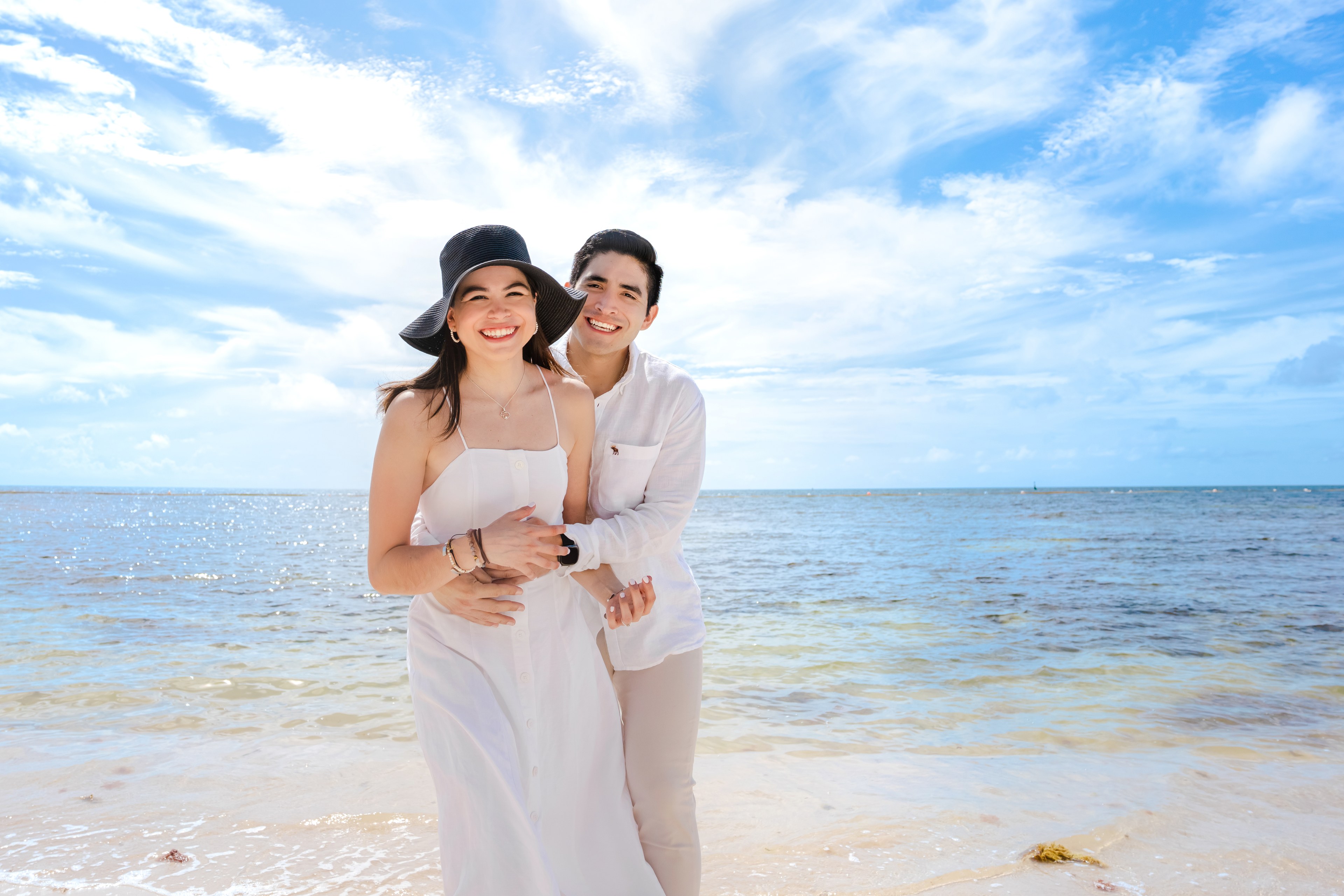
The most-requested format for couples is a single full day. We start at sunrise at Gran Cenote or Casa Cenote when the water is still and the crowds are not yet on the road. We return to your Tulum or Akumal resort by mid-morning for a wardrobe change and a long breakfast. The afternoon is yours to nap and dry. We meet again forty-five minutes before sunset on the beach for golden hour portraits along the Tulum Hotel Zone or at your private villa.
For weddings, we typically build the cenote session into the day after the ceremony as a trash-the-dress, so the dress can be enjoyed twice and the gallery has both a documentary and an editorial chapter. For brand and hotel commissions we plan three cenotes in a single day, with crew rotations, and deliver a curated set of magazine-ready frames per location.
Working with hotels and brands
For hotel and brand commissions, we handle the permit, the timing, the crew, and the local relationships. The Tulum and Akumal hotel circuit, including Habitas, Azulik, Be Tulum and the cenote-side villas of the Sian Ka'an buffer zone, all have specific access agreements with the surrounding cenotes; we know which one matches which campaign. If you are building a swimwear, bridal, or destination wedding brand around the Riviera Maya cenotes, we work as an editorial unit with full production, not just a freelance crew.
Tulum Cenotes Through Our Lens


The Finest Cenotes Near Tulum
Our team has photographed every major cenote in the region. These are the ones we return to for clarity, light, privacy, and visual impact.
Gran Cenote
Open-air twin pools with lily pads, turtles, and even morning light. Our default for couples.
Tulum-Cobá roadCenote Dos Ojos
Cathedral-ceiling cavern, part of the Sac Actun system. Best for editorial underwater portraits.
AkumalCasa Cenote
Mangrove-fed coastal cenote with a halocline. Soft watercolor blue, ideal for bridal swim.
Tankah Bay
Cenote Calavera
Three vertical light beams between 11am and 1pm. Short window, dramatic frames.
Tulum
Cenote Carwash
Shallow, lily-pad water with freshwater turtles. Most flexible for swimwear and bridal sessions.
Tulum-Cobá road
Sac Actun Entries
Pet Cemetery and Nohoch Nah Chich entries to the world's longest underwater cave system.
Riviera MayaFrom Inquiry to Gallery
Connect
Share your travel dates, hotel, and the cenote mood you want. We respond within 24 hours with a tailored proposal.
Plan
Receive a wardrobe guide, cenote shortlist, and a timeline built around light beams, permits, and the calmest water windows.
Create
We arrive early, brief safety, and guide you through breath and movement. The shoot is calm, slow and frame by frame.
Deliver
Preview gallery within 7 days. Final color-graded collection delivered via private online gallery in two to three weeks.
The cenotes we know by heart
Each cenote is privately managed by an ejido community or licensed operator. We coordinate permits and time slots in advance.
Everything You Need to Know

Let's Step Into the Water
Your cenote session deserves the right cenote, the right hour, and a team that knows the difference. Reserve your date and we will build the day around the light.