

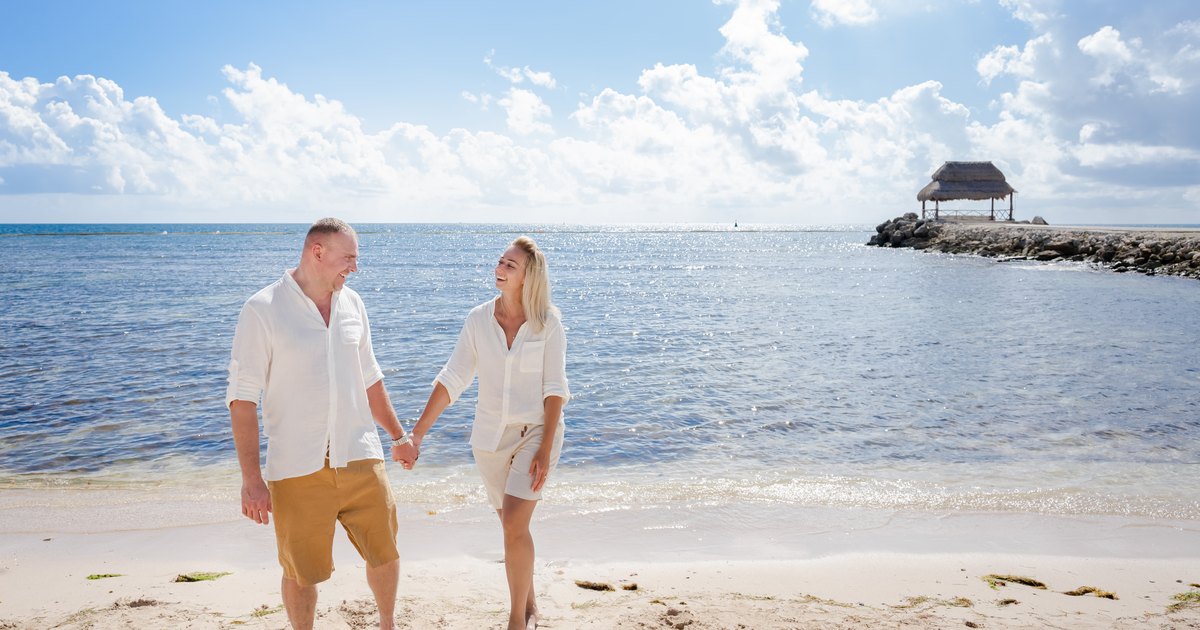
Los Cabos gives you two coastlines, the Pacific and the Sea of Cortez, within a 30-minute drive, with desert light unlike anything on the Caribbean side. Professional sessions run $400 to $1,500 USD, most clients book a 90-minute golden-hour shoot, and sunsets range from about 5:45 PM in winter to 7:50 PM in summer.
Los Cabos is not Cancún. It is not Tulum. It is not anywhere else in Mexico. The southern tip of the Baja California peninsula is where the Pacific Ocean collides with the Sea of Cortez, where desert cactus grows within sight of crashing waves, and where the light has a clarity you will not find on the Caribbean side. If you are planning a trip to Cabo and want photographs that actually capture what this place feels like, this guide covers everything you need to know, from exact locations and golden hour timing to resort access and wardrobe advice.
Why Los Cabos Is Different from Caribbean Mexico
Most visitors to Mexico's beach destinations default to the Caribbean coast, Cancún, Playa del Carmen, Tulum, and for good reason. The turquoise water and white sand are extraordinary. But Los Cabos offers something the Caribbean side physically cannot: a desert-ocean landscape that is visually unlike anything else in the Americas.
Where the Riviera Maya is lush, tropical, and green, Los Cabos is arid, sculptural, and golden. The terrain is defined by granite rock formations, towering cardon cacti, sand dunes that shift with the wind, and a coastline where massive Pacific swells crash against volcanic cliffs. The color palette is entirely different, warm ochre, terracotta, dusty sage, deep navy water instead of Caribbean aquamarine. For a Los Cabos photographer, this landscape provides a visual vocabulary that produces images with an editorial, almost cinematic quality that feels more Namibia than Cancún.
The resort architecture reflects this environment. Instead of the pastel palettes and thatched palapas of the Caribbean, Cabo's luxury properties feature clean concrete lines, natural stone, desert gardens, and floor-to-ceiling glass designed to frame the Pacific horizon. Every element, natural and designed, contributes to photographs that are unmistakably Los Cabos.
Pacific vs. Sea of Cortez: Light & Landscape Differences
Los Cabos sits at the very tip of the Baja peninsula, which means it has two entirely distinct coastlines within a 30-minute drive. Understanding the difference between them is essential for planning any photo session, because the light, the water behavior, and the overall mood are fundamentally different on each side.
The Pacific side faces west and south. This is where you find the dramatic, powerful ocean, large swells, rugged cliffs, deep blue water that turns almost black in certain light. Sunsets on the Pacific coast are extraordinary, with the sun dropping directly into the ocean and painting the sky in layers of copper, violet, and deep orange. The light during golden hour is warm and intense, creating strong contrast and deep shadows against the rock formations. This side is ideal for dramatic, editorial-style imagery, couples silhouetted against crashing waves, wedding portraits framed by volcanic rock, and wide landscape compositions that convey the raw scale of the coastline.
The Sea of Cortez side, sometimes called the Gulf side, faces east. The water here is calmer, clearer, and warmer. Jacques Cousteau famously called the Sea of Cortez "the world's aquarium," and the visibility bears that out. Mornings on this side are spectacular: the sun rises over the water, producing soft, diffused light that is exceptionally flattering for portraits. The beaches tend to be more swimmable, the sand finer, and the overall atmosphere more tranquil. This side works beautifully for family sessions, relaxed couples shoots, and any session where a serene, luminous quality is the goal.
The smartest approach, and the one our team recommends for most clients, is to use both sides strategically. A sunrise session on the Cortez side followed by a sunset session on the Pacific delivers two completely different visual stories in a single day.

Top 10 Photo Locations in Los Cabos
After photographing extensively across the Los Cabos corridor, our team has identified the locations that consistently produce the strongest results. Each offers something distinct, and the best sessions often combine two or three within a single shoot.
1. El Arco (The Arch of Cabo San Lucas)
The most iconic landmark in all of Baja California Sur. This natural granite arch at Land's End marks the exact point where the Pacific Ocean meets the Sea of Cortez. Accessible only by water taxi or private boat, El Arco provides a backdrop that is instantly recognizable yet endlessly photogenic. The best time to photograph here is late afternoon, when the western light illuminates the rock face and the surrounding water shifts between deep sapphire and jade green. Boat-based sessions allow for unique angles that most tourists never see.
2. Lover's Beach (Playa del Amor)
Tucked beside El Arco and accessible only by boat, Lover's Beach sits between the Pacific and the Sea of Cortez, literally at the meeting point of two oceans. The sand is coarse and golden, the rock formations tower overhead, and the seclusion creates an intimacy that is impossible to replicate at any public beach. Early morning visits, before the water taxis begin running, offer near-complete privacy.
3. Palmilla Beach
One of the few swimmable beaches on the Los Cabos corridor, Palmilla sits on the Sea of Cortez side with calm, turquoise water and soft sand. The beach is flanked by the One&Only Palmilla resort and offers a gentler, more refined aesthetic compared to the rugged Pacific side. Sunrise sessions here produce luminous, soft-toned images with clean, uncluttered horizons.
4. Médano Beach
The main beach of Cabo San Lucas, lively, wide, and directly facing El Arco in the distance. While busier than other locations during midday, early morning and golden hour sessions find Médano nearly empty, with the arch and the marina providing a layered, distinctly Cabo backdrop. The sand is fine and golden, and the water is calm enough for wading and interaction shots.
5. San José del Cabo Art District
A completely different visual environment. The historic downtown of San José del Cabo features colonial architecture, vibrant gallery facades, bougainvillea-draped walkways, and a main plaza with a centuries-old mission church. Thursday evening art walks fill the streets with energy and color. For couples seeking editorial-style portraits that go beyond the beach, the Art District offers texture, color, and architectural framing that feels authentically Mexican.
6. Todos Santos
Approximately one hour north of Cabo San Lucas on the Pacific coast, Todos Santos is a designated Pueblo Mágico, a small, bohemian artist town with brick-and-stucco architecture, surf beaches, open desert plains, and the iconic Hotel California. The drive itself passes through dramatic desert landscape with towering cacti and mountain views. Sessions here feel editorial and adventurous, with a visual character entirely distinct from the resort corridor.
7. The Cape, a Thompson Hotel
Perched on the cliffs of Cabo San Lucas with direct views of El Arco, The Cape combines brutalist concrete architecture with floor-to-ceiling ocean views. The rooftop, the infinity pool deck, and the minimalist hallways create a visual language that is modern, bold, and deeply photogenic. For couples and wedding parties who want an architectural, fashion-forward backdrop, The Cape is unmatched.
8. Montage Los Cabos
Located on Santa Maria Bay, one of the most pristine snorkeling beaches in the corridor, Montage combines hacienda-style elegance with the natural beauty of the Sea of Cortez. The property features manicured gardens, stone archways, a dramatic oceanfront lawn, and interiors that balance warmth with sophistication. It is one of the most versatile resort properties for photography, offering both intimate detail shots and sweeping ocean compositions within steps of each other.
9. Waldorf Astoria Los Cabos Pedregal
Entered through a private tunnel carved into the mountain, the Waldorf Astoria Pedregal occupies a secluded cove on the Pacific side with crashing waves, rugged cliffs, and some of the most dramatic resort architecture in Mexico. The property's tiered design, infinity pools overlooking the ocean, and the famous tunnel entrance create a sense of arrival and exclusivity that translates powerfully into photographs. A destination wedding photographer working at Pedregal has access to some of the most cinematic backdrops in all of Los Cabos.
10. Flora Farms
A 25-acre organic farm in the foothills of the Sierra de la Laguna mountains, Flora Farms is the antithesis of the beach resort aesthetic, and that is precisely its strength. Rustic wooden structures, open-air dining pavilions, vegetable gardens, mature trees, and warm ambient light create an environment that feels like a private countryside estate. For couples seeking something intimate, earthy, and unhurried, Flora Farms produces images with a warmth and texture that no beach can replicate. It is also one of the most sought-after wedding venues in the region.

Best Resorts for Photo Sessions
Los Cabos has one of the highest concentrations of luxury resorts in the Western Hemisphere, and the properties here are designed with a visual intention that makes them extraordinarily photogenic. Unlike some Caribbean resorts where the architecture recedes behind the landscape, Cabo's top hotels are architectural statements in their own right, and that translates directly into stronger imagery.
For Pacific-side drama, the Waldorf Astoria Pedregal and The Cape offer the most visually striking settings. Both properties lean into the raw power of the ocean, with modern design elements that create bold geometric frames against natural rock and surf. Solaz, a Luxury Collection Resort, combines contemporary Mexican design with sweeping desert-coast panoramas that work beautifully at any time of day.
On the Sea of Cortez side, One&Only Palmilla remains the gold standard, its hacienda-style grounds, hand-painted tile, and beachfront chapel have been the backdrop for some of the most recognizable resort photography in Mexico. Montage Los Cabos and Zadún, a Ritz-Carlton Reserve, offer more contemporary aesthetics with equal access to calm, turquoise water and pristine sand.
Along the corridor itself, Chileno Bay (an Auberge Resort) and the Viceroy Los Cabos provide infinity pools, private cabanas, and architectural details that create natural frames for portraits. Each property has its own light patterns, its own best angles, and its own access requirements, knowledge that comes only from repeated experience shooting at each location.
Wedding Photography at Cabo Venues
Los Cabos has emerged as one of the top destination wedding locations in the world, and for reasons that go beyond the scenery. The combination of direct flights from most major U.S. and Canadian cities, reliably dry weather from October through May, and a concentration of world-class venues within a compact geographic area makes the logistics remarkably manageable for destination celebrations.
The venues themselves range from beachfront resort ballrooms to private desert estates, and each offers a distinct visual identity. Flora Farms hosts intimate, rustic-chic celebrations under string lights and open sky. The Waldorf Astoria Pedregal stages dramatic ceremonies on cliffside terraces with Pacific waves crashing below. Montage Los Cabos provides elegant lawn ceremonies with the Sea of Cortez as a backdrop. Acre Baja, a treehouse-inspired property in the desert, delivers something entirely unexpected: elevated wooden platforms surrounded by mature trees, with mountain views and golden light filtering through the canopy.
What makes a cabo wedding photographer essential is the understanding of how light moves through these specific venues at specific times of day. A ceremony timed for 5:00 PM at one venue might produce harsh backlight, while the same time at another venue delivers the most flattering natural illumination of the day. Our team scouts every venue in advance, coordinates with planners on timeline specifics, and positions the ceremony and portrait windows to align with the best available light.
Most Cabo weddings are intimate by destination-wedding standards, 40 to 120 guests is the typical range, which creates a more relaxed, connected atmosphere that photographs beautifully. The smaller scale also allows more time for couple portraits, family groupings, and the candid moments between events that often become the most treasured images in the final gallery.
Golden Hour Timing by Season
Golden hour is not a fixed time, it shifts throughout the year, and in Los Cabos, the shift is significant enough to affect session planning. Because the Pacific coast faces west and slightly south, sunset timing and angle change dramatically between summer and winter.
December through February (Winter)
The sun sets between 5:45 PM and 6:15 PM. Golden hour begins around 5:00 PM, with the sun tracking lower across the southern sky. This produces long, warm shadows and the most extended golden light of the year. The lower sun angle also means the light wraps around subjects rather than striking from directly overhead, creating soft, dimensional portraits. Winter is peak season for a reason, the light alone justifies it.
March through May (Spring)
Sunset shifts to between 6:15 PM and 7:30 PM as days lengthen. The light remains excellent, with slightly higher sun angles that still produce strong golden-hour quality. March and April are arguably the sweet spot, warm but not hot, dry, uncrowded compared to the holiday season, and with sunsets that linger across the Pacific in layers of amber and rose.
June through August (Summer)
Sunset occurs between 7:30 PM and 7:50 PM. Golden hour starts around 6:45 PM. The light is beautiful but the air carries more humidity, which can soften distant details and produce hazier horizons. Summer sunsets, however, are often the most colorful of the year, the additional moisture in the atmosphere scatters light into vivid purples, magentas, and deep oranges that are impossible in the dry winter months. Temperatures are warmer, so hydration and shade between setups become important.
September through November (Autumn)
Sunset falls between 6:00 PM and 7:15 PM. September still carries the tail end of hurricane season, which means occasional cloud cover, but also the most dramatic, fast-moving skies of the year. October marks the transition into dry season and is one of the most underrated months for photography in Los Cabos: warm water, smaller crowds, and golden-hour light that combines the warmth of summer with the clarity of winter.
What to Wear in Cabo's Desert Landscape
The Los Cabos landscape demands a different wardrobe approach than the Caribbean. Where the Riviera Maya's turquoise water and white sand favor soft pastels and airy whites, Cabo's warm-toned desert and deep blue ocean respond best to colors that complement rather than compete with the environment.
Earth tones are the strongest choice: warm camel, terracotta, burnt sienna, dusty rose, sage green, and cream all harmonize naturally with the desert palette. Rich jewel tones, deep emerald, burgundy, and navy, also work exceptionally well, creating elegant contrast against the golden sand and rock without feeling out of place. Avoid bright white, which overexposes against the sand and loses detail in the strong Pacific light, and avoid neon or heavily saturated colors that clash with the natural subtlety of the landscape.
Fabric selection matters as much as color. Cabo is windy, particularly on the Pacific side, where ocean breezes are constant during golden hour. Flowing fabrics like silk, chiffon, and lightweight linen move beautifully in the wind and create the kind of natural motion that elevates a simple portrait into something cinematic. A long dress that catches the Cabo wind against a desert backdrop produces images that feel effortlessly editorial.
For men, linen trousers in sand or cream paired with a relaxed button-down in a complementary tone strike the right balance between polished and approachable. Avoid heavy structured suits unless the setting is an architectural resort interior. Footwear should be practical, most locations involve sand or uneven terrain, and barefoot often produces the best result on the beach.
Bring a second outfit if your session spans multiple locations. A flowing dress for the beach paired with something more structured for the Art District or a resort interior gives the final gallery visual variety without requiring a separate session.
